
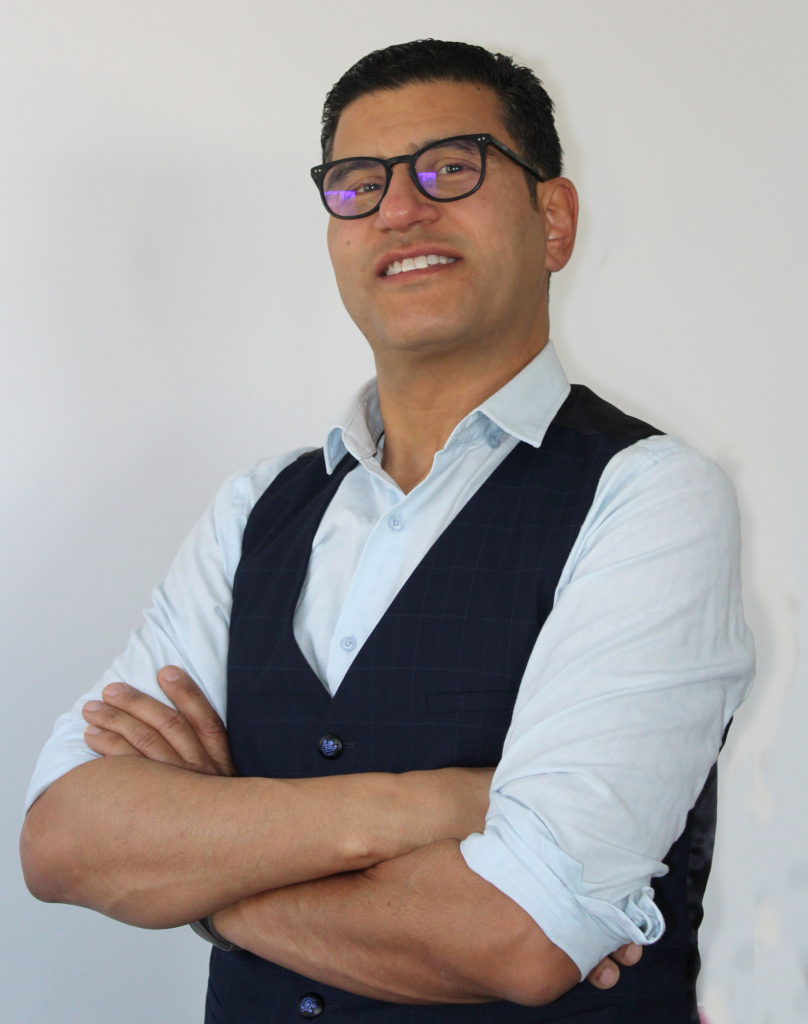
FAKHER HAKIMA
قسم التدريب الموسيقي
معلومات عامة
Professional Presentation: Dr. Fakher Hakima
Director of the Higher Institute of Music of Sousse | PhD in Musicology | Saxophonist & Scholar
Academic Leadership & Institutional Development
With over two decades of experience in higher education and cultural administration, I am currently the Director of the Higher Institute of Music of Sousse (Tunisia), a role I have held since 2021 (and previously from 2016–2020). Under my leadership, the institute has achieved milestones such as:
-
Securing international ISO 21001 certification for educational quality.
-
Establishing RadioUni (Sousse University Radio) and a digital recording studio.
-
Founding the National Center for Bray Music (CNBM) and launching innovative master’s programs in Sound Engineering and Music Therapy.
My academic credentials include a PhD in Music History from Sorbonne University (Paris IV) and an HDR (Qualification to Direct Research). I specialize in bridging traditional Arabic music with contemporary pedagogy, reflected in my publications and curriculum designs, such as the Rubu’ Qarn Music Foundation’s handbook.
Research & Publications
As a prolific scholar, my work explores the intersections of Arab musical traditions, modernity, and education. Notable contributions include:
-
"Current Arabic Musical Compositions between Maqami and Tonal" (shortlisted for the Sheikh Zayed Book Award 2022).
-
Collaborative research with international institutions like the Toda Institute for Humanities (Japan) on music, power, and democracy.
-
Supervision of 93+ bachelor’s/master’s theses on topics ranging from ethnomusicology to music marketing.
Artistic Career & Innovation
A professional saxophonist, I have:
-
Performed with the Tunisian Symphony Orchestra and pioneered Arabic saxophone workshops globally (e.g., Shanghai Conservatory, Egypt Cultural Center Paris).
-
Composed for the French film "Belphégor – Le Fantôme du Louvre" (2001) with Bruno Coulais.
-
Developed mechanical improvements for the saxophone in collaboration with Selmer Paris, enabling ¾ intervals.
International Engagement & Training
Certified as a MusiQuE Peer Reviewer (Belgium) and ISO 21001 Expert, I actively contribute to global music education standards. My participation in EU-funded programs (Erasmus+, Horizon Europe) underscores my commitment to cross-cultural collaboration in arts and governance.
Honors & Advocacy
-
Medal of Cultural Merit (Tunisian Republic, 2019).
-
Named "Most Influential Musical Personality of 2020" by the Tunisian Stars Foundation.
-
Founder of the Sousse Symphony Orchestra Society and advocate for arts accessibility through roles in national committees (e.g., Carthage Music Days, Hammamet Festival).
Vision
I am driven by a passion for preserving musical heritage while fostering innovation—whether through academic research, institutional reform, or artistic expression. My goal is to cultivate spaces where music serves as a tool for education, therapy, and societal transformation.
Let’s connect:
fakherhakima7@gmail.com | +216 25 450 225
LinkedIn https://www.linkedin.com/in/fakher-hakima-b0940820a/
اتصال
الدبلومات
| Qualified to direct reaserch (HDR) | June 2022 |
| PhD in « music history and musical sciences » at Sorbone University 4 Paris | December 2005 |
| Advanced Studies Diploma in « music history and musical sciences » at Sorbone University 4 Paris |
October 1997 |
| Master’s degree in music and musicology at the higher institute of music of tunis | June 1995 |
| Diploma of arabic music of minister of culturel | June 1992 |
| Arts bachelor at the High School of Sousse | June 1991 |
تعليم
In addition to equipping students with knowledge about the factors and tools of musical evolution during the second half of the 20th century, this lesson also aims to develop their competence in critical and comparative analytical reading of two musical models:
-
A reference model (original work).
-
A reimagined model from the contemporary era (early 21st century).
The goal is to enable students to compare the same work in two distinct performances separated by time, identifying key musical, organological, and technical transformations that accompanied the "temporal journey" of the piece. This analysis is grounded in three approaches:
-
Socio-cultural (first approach).
-
Organological (second approach).
-
Applied musical (third approach).
This three-dimensional comparison primarily seeks to provide students with the methodological, scientific, and technical tools to understand and analyze topics related to:
-
Issues of cultural exchange (acculturation).
-
Hypotheses about the evolution of musical practices across genres and styles.
(Relative to sociocultural changes and advancements in instruments/ensembles used in performances.) -
Deepening students’ skills in musical notation and analysis.
B) Methodology
To deliver this lesson, we rely on the following:
-
Engaging students by introducing lesson themes through discussions about paradoxes and problematic situations tied to their lived musical experiences. This stimulates curiosity and creates the illusion of their participation in shaping the lesson’s direction and selecting case studies.
-
Audiovisual references (historical and contemporary) as a basis for observations, paradoxes, hypotheses, and core lesson themes.
-
Guided debates encouraging student contributions to formulate questions organically.
-
Systematic use of a video projector to present content in a slide-based format.
-
Supplementary materials, including links to written and audiovisual resources that expand on lesson topics.
ب) المناهج المتبعة
*حثّ الطالب على المشاركة والانخراط في بناء محتوى كلّ حصّة (أو محور) وذلك من خلال جلب اهتمامه بطرح مفارقات وملاحظات وتساؤلات ذات صلة بوضعيات موسيقية عاينها وفي بعض الأحيان مارسها.
*الاعتماد على نماذج سمعية بصرية لمزيد تجسيد الجوانب النظرية للدّرس / ولإضفاء أبعاد عملية واقعية
صياغة جماعية لخلاصة محتوى كل حصة (لتكون هذه الخلاصة لاحقا محتوى مسوّدة لتلخيص عام لمحاور الدّرس)ص *
*استعمال المسلاط (vidéoprojecteur) وتجنّب تقديم نصّ مرقون من الدّرس أو إملاءه
صفسح المجال للنقاش بين الطلبة (وافتعاله إن تطلب الأمر ذلك) في خاتمة كل حصة، لغاية تكريس الهدف الأساسي لهذا الدّرس والذي كما اشرنا إليه أعلاه يتمحور حول إكساب الطالب القدرة على التفكير والنقاش والإقناع وكذلك قصد الإعداد الجيد والتدريب على منهج دروس حلقات البحث
A) Lesson Objectives
The goal of these lessons is to equip students with the technical and stylistic skills to:
-
First stage: Master the fundamental techniques of playing the instrument.
-
Second stage: Specialize in one of the musical styles associated with the instrument (beyond classical music, which serves as the core foundation for learning its basic techniques).
Thus, the curriculum is divided into two phases:
-
Phase 1: A common core focused on foundational playing techniques, primarily drawing from the Western classical repertoire.
-
Phase 2: Developing advanced techniques to adapt the instrument to the performance practices of specific styles, such as:
-
Western classical / Jazz / Popular music (e.g., variétés) / Contemporary Arabic music / etc.
-
B) Methodology
Given the individualized nature of this applied lesson, the approach follows "differentiated pedagogy" (la pédagogie individualisée), which tailors instruction to:
-
The student’s psychological profile, communication readiness, and technical aptitudes.
-
The physical demands of the instrument (e.g., diaphragm, tongue, and lip coordination).
This methodology hinges on three dimensions of the pedagogical triangle:
-
Cognitive Dimension (Knowledge):
-
Despite the abundance of specialized resources (e.g., jazz method books, classical études, Afro-Latin rhythmic techniques, or trio cuivre repertoires), I opted to create a customized method. This adapts existing materials to our educational context while allowing students to later specialize in their preferred style.
-
-
Personal & Persuasive Dimensions:
To foster engagement, I emphasize:-
Side-by-side performance: Playing alongside the student.
-
Memorization: Encouraging repertoire retention.
-
Audiovisual examples: Supplementing lessons with listening/viewing materials.
-
Collaborative practice: Periodic duets/trios (with myself or peers).
-
Group sessions: Monthly collective workshops to complement individual lessons.
-
Repertoire choice: Allowing limited freedom within the program’s framework.
-
Ensemble participation: Urging students to join institutional/external groups across genres to apply their skills.
-
Key Terms:
-
Differentiated pedagogy = البيداغوجيا المُوجّهة
-
Performance practices = الخصوصيات الأدائية
-
Trio cuivre = ثلاثي النحاسيات (brass trio)
-
Cognitive/personal/persuasive dimensions = الأبعاد المعرفية/الشخصية/الإقناعية
الخبرة المهنية
Director of the Higher Institute of Music of Sousse
Ministry of Higher Education, Tunisia · Full-time
December 2020 - Present · 4 years 5 months · On-site, Sousse, Tunisia
As Director, I spearheaded institutional modernization and strategic development at ISM Sousse, achieving key milestones:
ISO 21001 Certification: First Tunisian music institute certified, aligning academic management with international standards.
Innovative Infrastructure:
-
Digital recording studio (2024)
-
University radio station RadioUni (2024)
-
National Center for Braille Music (CNMB)—unique in Tunisia (2023)
Pioneering Degree Programs:
-
Professional Master’s in Therapeutic Intervention Through Music (with Sousse Faculty of Medicine)
-
Master’s in Sound Engineering and Technology (sectoral partnerships)
International Recognition:
-
Submitted accreditation dossier to MusiQuE (Belgium) for programs (2025–2028).
-
Secured international funding for Strategic Management Development project.
Approach: Blending academic excellence, pedagogical innovation, and cultural relevance to position ISM as a global benchmark.
Key Skills: Talent Management · MusiQuE Accreditation Expert · Training & Development · Leadership · Arts Administration · Strategic Communication · Musicology
Directeur de la Musique et de la Danse Directeur de la Musique et de la Danse
Ministère des Affaires Culturelles · Temps pleinMinistère des Affaires Culturelles · Temps pleinoct. 2016 - mai 2020 · 3 ans 8 moisDu oct. 2016 au mai 2020 · 3 ans 8 moisTunisie · Sur siteTunisie · Sur site
-
- *I chaired the National Committee for Reformulating Music Education Programs in Public Schools.
* I oversaw the Committee for Drafting legal texts for the creation of the National Diploma in Music and the Higher National Diploma for Music Institutes at the Ministry of Cultural Affairs.
* I served as Chair of the National Committee for the Reformulation of Legal Texts on the Administrative and Financial Organization of Public Music Schools".
* I served as the General Coordinator of the Committee in Charge of Designing Training Programs for the National Diploma in Dance and Physical Expression.
* I was the Leader of the Committee for Drafting Legal Texts for the National Diploma in Dance and Physical Expression for the Ministry of Cultural Affairs.
* Chairman of the Recruitment and Promotion Committee for Music Education Teachers at Public Music Schools.
*Member of the National Committee in Charge of the Inauguration Season of the City of Culture, Responsible for Programming and Selection of Musical projects.
*Coordinator of the Music and Dance Pole Center in the City of Culture.
*General Coordinator of the Carthage Music Days (JMC), 2019 Session.
*General Coordinator of the Carthage Choreographic Days (JCC), 2018 Session.
*Director General of the International Book Fair (March 2018).
*General Coordinator of the Carthage Poetry Days, 2018 Session.
*2018–2019: I represented the Ministry of Cultural Affairs at the Visa for Music Festival in Morocco.
*April–July 2018 / 2022 / 2023: I served as Chair of the Artistic Committees for the International Hammamet Festival.
*January–July 2023 / 2024: I served as Chair of the Artistic Committee for the International Monastir Festival.
*February–March 2021: I served on the Technical Committee, which reviewed applications for the position of Technical Expert at the International Cultural Center of Hammamet.*I chaired the National Committee for Reformulating Music Education Programs in Public Schools. * I oversaw the Committee for Drafting legal texts for the creation of the National Diploma in Music and the Higher National Diploma for Music Institutes at the Ministry of Cultural Affairs. * I served as Chair of the National Committee for the Reformulation of Legal Texts on the Administrative and Financial Organization of Public Music Schools". * I served as the General Coordinator of the Committee in Charge of Designing Training Programs for the National Diploma in Dance and Physical Expression. * I was the Leader of the Committee for Drafting Legal Texts for the National Diploma in Dance and Physical Expression for the Ministry of Cultural Affairs. * Chairman of the Recruitment and Promotion Committee for Music Education Teachers at Public Music Schools. *Member of the National Committee in Charge of the Inauguration Season of the City of Culture, Responsible for Programming and Selection of Musical projects. *Coordinator of the Music and Dance Pole Center in the City of Culture. *General Coordinator of the Carthage Music Days (JMC), 2019 Session. *General Coordinator of the Carthage Choreographic Days (JCC), 2018 Session. *Director General of the International Book Fair (March 2018). *General Coordinator of the Carthage Poetry Days, 2018 Session. *2018–2019: I represented the Ministry of Cultural Affairs at the Visa for Music Festival in Morocco. *April–July 2018 / 2022 / 2023: I served as Chair of the Artistic Committees for the International Hammamet Festival. *January–July 2023 / 2024: I served as Chair of the Artistic Committee for the International Monastir Festival. *February–March 2021: I served on the Technical Committee, which reviewed applications for the position of Technical Expert at the International Cultural Center of Hammamet.
- *I chaired the National Committee for Reformulating Music Education Programs in Public Schools.
-
- Compétences : Gestion des talents · Expert in accreditation of music and musicology training programs for MusiQue Quality Enhancement · Formation et développement · Développement des personnes · Leadership · Management · Gestion de la musique · Développement du management · Communication
تمرين
الأنشطة البحثية
تأطير الرسائل الجامعية ومشاريع التخرج
وعليه فقد تم تصنيف هذه الأشغال إلى :
- مواضيع ومشاريع موسيقية تهتم بتطوّر أسلوب الأداء (الآلي والغنائي بمختلف لغاته وأنماطه وتوجهاته الموسيقية) من خلال تجارب المزج الموسيقي أو التطوير نسبة لشخصيات موسيقية أو نسبة لتوظيف استثنائي لآلات موسيقية
- مواضيع تهتم بإشكاليات التعليم الموسيقي من خلال تحليل واقعه وآفاقه
- مواضيع في علاقة بتطور الموسيقى من خلال توظيف الصورة
- مواضيع في علاقة بوقع آليات الترويج والاستثمار في تطور الفعل الموسيقي
- مواضيع في علاقة بتطور الأنماط الموسيقية الوظيفية (علم موسيقى الشعوب)
| مجال الاختصاص البحثي | عدد الأعمال |
| تطور أسلوب الأداء الموسيقي من خلال تقاطع اللغات الموسيقية وتجارب المزج الموسيقي | 43 |
| حول إشكاليات واقع التعليم الموسيقي وآفاقه | 17 |
| حول علاقة الموسيقى بالصورة | 13 |
| حول علم موسيقى الشعوب | 5 |
| حول التسويق والترويج الموسيقي | 5 |
| مشاريع رسائل تخرج في شكل مؤلفات موسيقية حول مشاريع تجارب مزج موسيقي | 7 |
| المجموع | 90 |
Scientific activity and leading university research
A) Scientific books and publications*October 2023 : A detailed scientific paper in arabic languge titled
وحركية التفكير الفعل الموسيقي بين ثوابت الفكر
" "Musical Action between the Constants of Thought and the Movement of Thought" appeared in the Encyclopedia of Music and Musical Sciences, National Laboratory for Research in Culture, Modern Technologies, and Development (CUNTIC), SOTUMEDIA Publishing
*March 2023 : Creating the three sections of the Rubu' Qarn Music Foundation's musical education handbook (the trainer's guide, the affiliate's guide, and the institution's general framework).
*October 2022 : An article titled "The Music Scene in Tunisia between the Challenges of
University Formation and the Reality of Professional Practices
" المشهد الموسيقي بين رهانات التكوين وواقع الممارسات المهنية
(I was published by a collective author entitled "Questions of Creativity that Have Not Been Asked Yet," published by the Arab Democratic Center for Strategic, Political, and Economic Studies, Berlin/Germany.
*October 2021 : Under the scientific supervision of the Center for Arab Mediterranean Music, I published the book "Current Arabic Musical Compositions between Maqami and Tonal" “المؤلفات الموسيقية العربية الراهنة بين المقامية والتونالية” (Sotimedia Publishing House). Out of 286 nominations, this book was chosen for both the long list (12) and the short list (03 books). To receive the Sheikh Zayed Book Competition Award in Abu Dhabi for the Cultural Year 2022.
*December 2017 : Following the scientific symposium held at the Higher Institute of Music in Tunisia on December 7–9, 2017, which was sponsored by the National Laboratory for research into Culture, Modern Technologies and Development (CUNTIC) and the Center for Arab Mediterranean Music, SOTUMEDIA Publishing House, an article titled "Contemporary Arabic Musical Compositions between the Logic of the Maqami Style and the Logic of the Tonal Style" was published as part of a collective work titled Maqami from the Perspective of Modernity.
*Fabrary 2016 : Under the direction of the Japanese Toda Institute for Humanities, an Englishlanguage article titled "Musical expression, Power and democracy" was published as part of a group project named Music Power and Liberty, which was overseen scientifically by researcher Olivier Urbain, Publications I.B. TAURIS.
*December 2014 : Under the scientific supervision of Professors Mahmoud Quetat, Al-Asaad Zouari, and Samir Becha, an article titled "The Impact of the Bedouin Musical Heritage on Saliha's Performance Style" was published as part of a collective book titled “Articles about Saliha”, following the scientific symposium held at the Arab Mediterranean Music Center on the occasion of the centennial of the Tunisian singer Saliha.
*May 2012 : An accepted contribution to the collaborative work “Rhythm in Music between Theory and Practice” is titled "Mastering Rhythm between Innate Predispositions and Cultural Acquisitions." "إتقان الإيقاع بين الاستعدادات الفطرية والمكتسبات الثقافية" After the scientific symposium held May 4-5, 2012, at the Arab Mediterranean Music Center, Publications Karem Al- Sherif.
*October 2011 : Under the direction of the Japanese Toda Institute for Humanistic Studies, an English-language article titled "Examples of Tunisian Intermusicality: Particularism and Universalism" was published as part of a group project titled "Music and Solidarity: Questions of Universality, Consciousness, and Connection," which was overseen by researcher Olivier Urbain and published after a scientific symposium. This was held August 15–17, 2010 in Tunisia's City of Science, . editions I.B TAURIS.
*November 2011 : Under the scientific direction of Professors Mohammad Zin al-Abidin and Mohammad Massoud Idris, the Higher Institute of Theater and Music published a collective publication called Space of the Arts, issue 2, which included an article titled "Teach Children While They Play." "علّم الاطفال وهم يعزفون" Ed. Dar Sahar Publishing.
*Fabrary 2008 : As a result of the National Forum of Higher Institutes of Music on the topic of “Music education between theoretical approach and applied practice”, the second session took place on February 23–24, 2008, and Professor Al-Asaad Al-Zawari served as the scientific supervisor. The article, which was collectively published and titled "Music Education in Higher Institutes of Music: Reality and Prospects," was published by Tasfir Publishing House.
*November 2008 : Under the scientific direction of Professor Mohamed Zin El Abidine and the Higher Institute of Music in Tunisia, a collaboratively published article titled "The Content of Musical Sciences Lessons between the Theoretical Approach and Applied
"was published in the محتوى دروس العلوم الموسيقية بين المقاربة النظرية والممارسة التطبيقية""Practice
Encyclopedia of Musical Sciences.
*November 2007 : A collaboratively published French essay named "Les enjeux politiques de la musique populaire tunisienne" was published in November 2007 in the Encyclopedia of Musical Sciences, with scientific oversight provided by Professor Mohamed Zin El Abidine the director of Higher Institute of Music in Tunisia.
مهارات
اللغات
الحياة النقابية
*23/10/2011 : Head of the El Kantaoui polling station during the National Tunisian Constituent Assembly elections.
*2011 : Founding member of Sousse Arts Association (Soussarts).
*2011 : President of the Cultural Development Work Association at the Higher Institute of Music in Sousse.
*2013 : A founding member of the Rachidia Association, Sousse Section
*2009/2016 : Vice President, Tunisian Association for Musical Sciences
*2017 : the president of Tunisian Association for Musical Sciences
*2021 : Founding member of Sousse Symphony Orchestra Society (OSS)